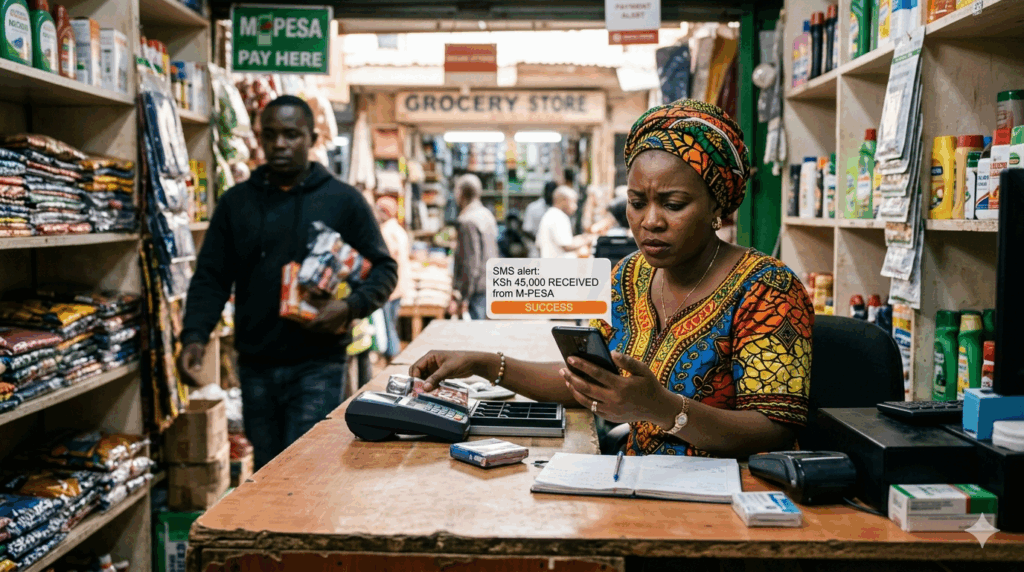
In many African markets today, the most dangerous business threat is not armed robbery or shoplifting. It’s fake payment alerts. Every day, small business owners lose money when customers present false bank alerts or manipulated payment confirmations to claim they have paid for goods. By the time the business owner realizes the payment never arrived, the customer is already gone.
This growing form of digital fraud is affecting thousands of small retailers, market traders, and service providers across the continent. As digital payments become more common, fake alerts are becoming one of the most serious financial risks facing small businesses. Understanding how this fraud works, and how to prevent it is critical for protecting revenue and maintaining trust in digital transactions.
What Are Fake Payment Alerts?
A fake payment alert is a fraudulent notification designed to trick a business owner into believing that a payment has been completed.
Scammers often show:
- Edited bank SMS messages
- Fake mobile banking notifications
- Screenshots of manipulated transfer confirmations
- Delayed transfer claims
These alerts make it appear that money has been sent when no actual transaction occurred.
Unsuspecting merchants may release goods before confirming the payment.
Once the fraud is discovered, the business has already suffered the loss.
Why Fake Payment Alerts Are Increasing
The rise of digital payments has created many benefits for businesses, but it has also opened the door to new forms of fraud.
Several factors are contributing to the increase in fake alerts.
1. Increased Use of Mobile Banking
Mobile banking apps and instant transfer systems have made digital payments more common.
However, fraudsters exploit the trust merchants place in these payment notifications.
Because many transactions rely on SMS alerts or screenshots, scammers can easily fabricate fake messages.
2. Fast-Paced Retail Environments
Busy retail environments make it easier for scammers to succeed.
When stores are crowded and staff are serving multiple customers, verifying every payment carefully can be difficult.
Fraudsters take advantage of this urgency.
3. Limited Payment Verification Systems
Many small businesses rely solely on customer-provided proof of payment.
Without proper systems to verify transactions directly, merchants may unknowingly accept fraudulent alerts.
4. Growing Digital Payment Adoption
As digital payments become more popular across Africa, fraud tactics are evolving alongside them.
While digital payments improve convenience, they also require better verification methods.
How Fake Payment Fraud Typically Happens
Understanding how these scams occur can help businesses prevent them.
A common fake alert scenario looks like this:
- A customer selects products in a store.
- They claim they will pay through bank transfer or mobile payment.
- The customer shows a payment confirmation screenshot or SMS alert.
- The merchant releases the goods.
- Later, the merchant discovers the payment never arrived.
In many cases, scammers create fake notifications using editing apps or spoofed SMS messages.
The entire transaction may take only a few minutes.
The Real Cost of Fake Payment Alerts
Fake payment fraud may seem small at first, but the cumulative impact can be devastating.
Some of the consequences include:
Revenue Loss
Businesses lose the value of goods without receiving payment.
Reduced Trust in Digital Payments
Repeated fraud incidents may cause merchants to reject digital payment methods.
Operational Disruptions
Staff must spend additional time verifying transactions.
Financial Instability
For small businesses operating on thin profit margins, even a few fraudulent transactions can cause serious financial strain.
These risks highlight the need for better transaction verification systems.
How Businesses Can Protect Themselves
Although fake payment alerts are a growing problem, several practical steps can help reduce the risk.
Always Confirm Payments
Before releasing goods, merchants should verify that funds have actually been credited to their account.
Avoid Relying on Screenshots
Screenshots can easily be edited. Merchants should rely on verified transaction records instead.
Use Real-Time Business Management Tools
Digital platforms that record transactions directly help reduce reliance on manual verification.
For example, tools like the timart business app help entrepreneurs track sales and maintain clear financial records.
These systems make it easier to detect suspicious transactions.
Train Staff to Recognize Fraud
Employees should be trained to identify common fraud tactics and verify payments carefully.
The Role of Technology in Preventing Payment Fraud
Technology can play a crucial role in protecting businesses from payment fraud.
Modern business management platforms provide structured transaction records that help merchants verify payments more efficiently.
Business apps help entrepreneurs:
- Record every sale
- Track incoming payments
- Maintain organized financial records
- Monitor daily revenue
The timart business app supports these capabilities by helping business owners manage transactions and monitor financial activity in real time.
When businesses maintain accurate records, it becomes much easier to identify discrepancies and prevent fraud.
Why Financial Awareness Is Essential for SMEs
As African businesses continue adopting digital payment systems, financial awareness is becoming increasingly important.
Entrepreneurs must understand both the benefits and risks of digital transactions.
Organizations such as the International Finance Corporation emphasize the importance of financial management and digital literacy for small businesses.
Learn more here: https://www.ifc.org
With the right knowledge and tools, SMEs can safely embrace digital payment systems while protecting their revenue.
FAQs
1. What is a fake payment alert?
A fake payment alert is a fraudulent notification designed to trick a merchant into believing that a payment has been made.
2. Why are fake payment alerts increasing in Africa?
The rise of mobile banking and digital payments has created opportunities for fraudsters to manipulate payment confirmations.
3. How do scammers create fake payment alerts?
Scammers may edit SMS notifications, create fake screenshots, or use apps that mimic bank alerts.
4. How can businesses verify payments safely?
Merchants should confirm that funds have been credited directly to their bank account before releasing goods.
5. Do fake payment alerts affect only small businesses?
While any business can be targeted, small retailers and informal merchants are particularly vulnerable.
6. How does the timart business app help reduce fraud risks?
The timart business app helps businesses track sales and maintain organized transaction records, making it easier to monitor financial activity and identify suspicious transactions.
Conclusion
Fake payment alerts are quickly becoming one of the most dangerous forms of fraud facing African businesses.
Unlike traditional theft, these scams exploit trust and speed, allowing fraudsters to walk away with goods before the deception is discovered.
As digital payments continue expanding across the continent, businesses must adopt better verification practices and financial systems.
Tools like the timart business app help entrepreneurs maintain organized transaction records and gain clearer visibility into their business finances.
By combining awareness, caution, and digital tools, African businesses can protect themselves and continue benefiting from the growing digital payment ecosystem.